Unfair dismissal claim is a process where an employee believes they have been dismissed unreasonably or unjustly by their employer. Unfair dismissal claim can be initiated if:
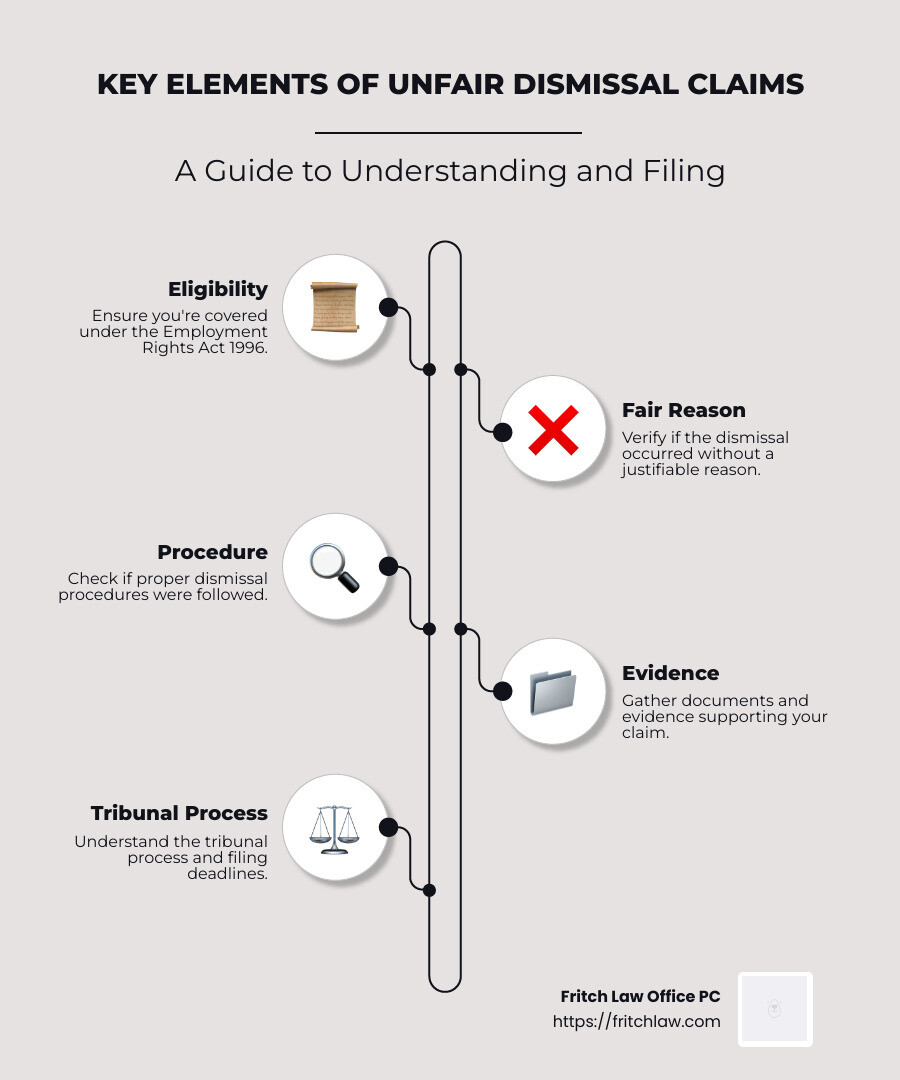
- You were dismissed without a fair reason under the Employment Rights Act 1996.
- A proper dismissal procedure wasn’t followed.
- Your dismissal breached your statutory rights or was discriminatory.
In today’s employment landscape, understanding the intricacies of unfair dismissal claims is crucial. With the law encompassing various dimensions, from employment rights to the procedural aspects of dismissal, it’s imperative for both employees and employers to be well-informed. This knowledge not only helps avoid potential disputes but also ensures fair treatment in the workplace.
I’m David Fritch, an experienced lawyer with over 40 years of comprehensive legal practice. I offer guidance to individuals navigating the challenging waters of unfair dismissal claims, assisting them in understanding their rights and achieving just outcomes.
Understanding Unfair Dismissal
When we talk about unfair dismissal, it’s essential to differentiate it from wrongful termination. While both terms relate to ending employment, they have distinct legal meanings.
Wrongful termination occurs when an employer breaks the terms of an employment contract or violates labor laws. For instance, if an employee is fired without the notice period specified in their contract, it may be considered wrongful termination.
In contrast, an unfair dismissal claim focuses on the fairness of the dismissal process. It examines whether the employer had a valid reason and followed a fair procedure. The Employment Rights Act 1996 outlines five potentially fair reasons for dismissal, including capability, conduct, and redundancy. However, even if one of these reasons is cited, the process must still be fair.
Employment Contract
Your employment contract is a crucial document in these scenarios. It spells out your rights and obligations, as well as those of your employer. If your employer dismisses you in a way that breaches this contract, it could lead to a claim for wrongful termination. For example, if your contract states that you must receive three warnings before dismissal, and you are fired without any warning, this could be a breach.
Statutory Rights
Statutory rights are legal rights granted to employees by law. These rights include protection against discrimination, entitlement to a minimum wage, and the right to a safe working environment. If you are dismissed for asserting any of these rights, such as refusing to work in unsafe conditions, this could form the basis of an unfair dismissal claim.
Key Takeaways
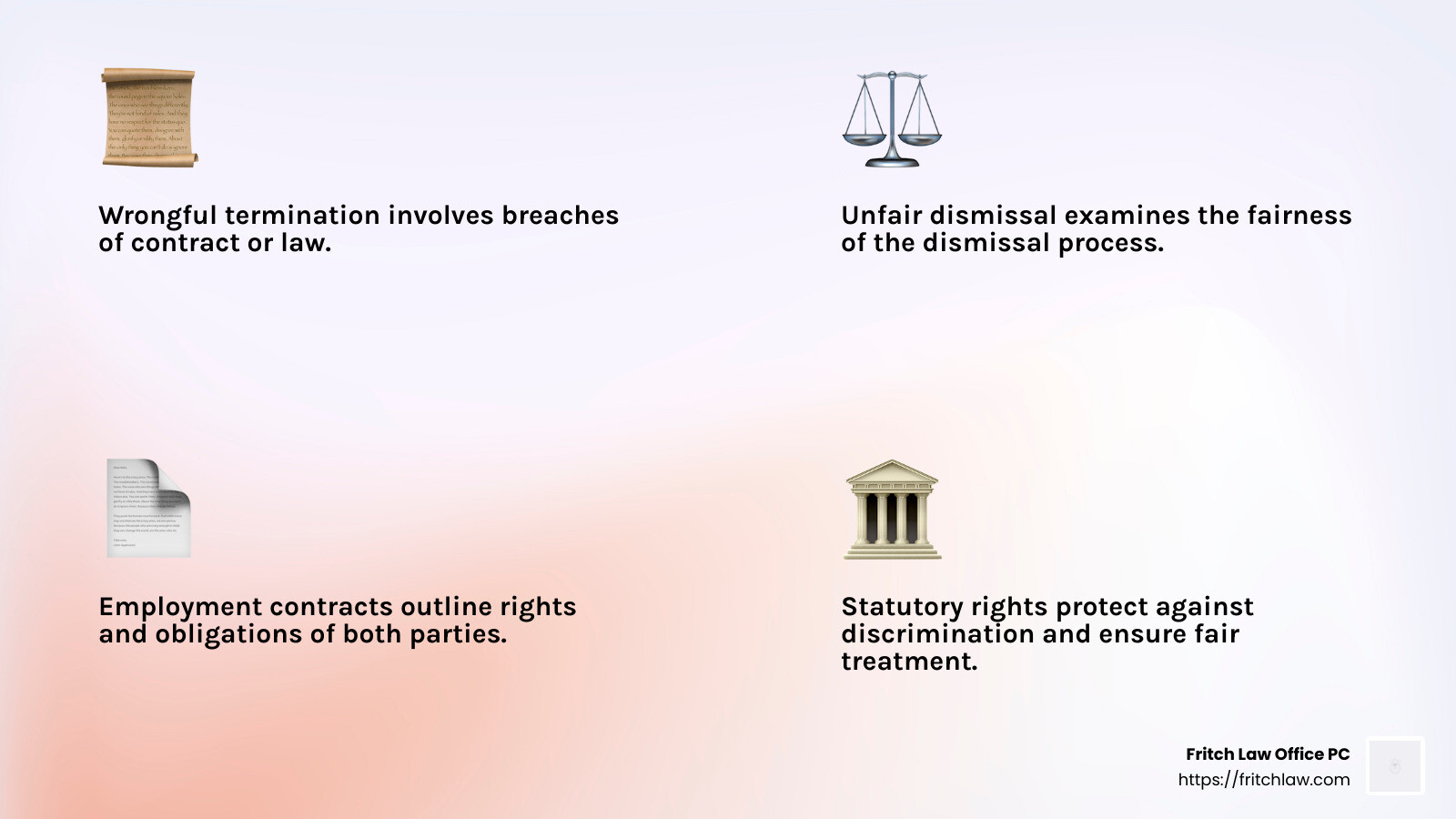
- Wrongful termination is about breaches of contract or law.
- Unfair dismissal examines the fairness of the dismissal process.
- Employment contracts and statutory rights are central to these claims.
Understanding these concepts can help you determine if you have grounds to make an unfair dismissal claim. If you’re facing such a situation, consulting with an experienced lawyer can provide clarity and guide you through the legal process.
How to File an Unfair Dismissal Claim
Filing an unfair dismissal claim can feel overwhelming, but understanding the steps involved can make the process smoother. Here’s a simple breakdown of what you need to do:
Tribunal Process
The first step in pursuing an unfair dismissal claim is to apply to the Employment Tribunal. This is where your case will be heard and judged. The tribunal will examine if your dismissal was fair and if your employer followed the correct procedures.
-
Early Conciliation: Before your case reaches the tribunal, you must attempt early conciliation through Acas (Advisory, Conciliation and Arbitration Service). This is a free service that aims to resolve disputes without going to tribunal. You must notify Acas of your intent to make a claim, and they will offer to mediate between you and your employer.
-
Filing the Claim: If early conciliation doesn’t resolve the issue, you can then file your claim with the tribunal. This involves submitting a form that outlines your case and the reasons you believe your dismissal was unfair.
Filing Deadlines
Timing is crucial when filing an unfair dismissal claim. You have a strict deadline to adhere to:
-
21 Days in Australia: You must file your claim within 21 days of your dismissal taking effect. This period starts the day after your dismissal.
-
3 Months Less a Day in the UK: In the UK, you must start the early conciliation process within three months less one day from the date of your dismissal.
Missing these deadlines can jeopardize your ability to make a claim, so it’s important to act quickly.
Legal Counsel
Navigating the legal landscape of an unfair dismissal claim can be complex. Seeking legal counsel can provide invaluable support:
-
Experienced Lawyers: An experienced lawyer can help you understand your rights, gather necessary evidence, and present your case effectively to the tribunal.
-
Cost Considerations: Discuss fees and any potential costs with your lawyer upfront. Some may offer a free initial consultation, which can help you decide if they are the right fit for your case.
-
Alternative Dispute Resolution: Your lawyer can also advise on other ways to resolve the dispute, such as settlement negotiations, which might avoid the need for a tribunal hearing.
Filing an unfair dismissal claim is a structured process that requires attention to detail and adherence to deadlines. By understanding the tribunal process, acting within the filing deadlines, and seeking the right legal counsel, you can effectively pursue justice for unfair dismissal.
In the next section, we’ll explore how to prove your unfair dismissal claim, including the evidence you’ll need and how to demonstrate contract violations.
Proving Your Unfair Dismissal Claim
Once you’ve taken the initial steps to file an unfair dismissal claim, the next crucial phase is proving your case. Here’s how you can do it:
Burden of Proof
In an unfair dismissal claim, the burden of proof often lies with the employer. They must show that the dismissal was fair and reasonable. However, as the employee, you still need to present a strong case to support your claim. This involves demonstrating that your dismissal was harsh, unjust, or unreasonable.
Evidence Requirements
Gathering the right evidence is key to proving your claim. Here’s what you might need:
-
Employment Contract: This is your starting point. It outlines your terms of employment and any conditions that were violated during your dismissal.
-
Correspondence: Emails, letters, or any written communication related to your dismissal can provide insight into the reasons behind your termination.
-
Witness Statements: Colleagues who can testify about your work performance or any discriminatory practices can be valuable.
-
Performance Reviews: Any documentation showing consistent or good performance can counter claims of poor performance used as a reason for dismissal.
Contract Violations
Proving a violation of your employment contract can strengthen your case. Look for:
-
Breach of Procedure: If your employer didn’t follow the correct dismissal procedures as outlined in your contract or company policy, it could support your claim.
-
Discrimination or Retaliation: If you were dismissed for discriminatory reasons or as retaliation for whistleblowing or other protected actions, this is considered automatically unfair and strengthens your claim.
-
Inconsistency: If similar cases were handled differently, it may indicate unfair treatment.
Proving your unfair dismissal claim requires a strategic approach. By understanding the burden of proof, gathering solid evidence, and identifying any contract violations, you can build a compelling case.
Next, we’ll discuss the remedies available if your claim succeeds, including compensation and possible reinstatement.
Remedies for Unfair Dismissal
If your unfair dismissal claim is successful, there are several remedies that may be available to you. Let’s break down what you can expect:
Compensation
Compensation is the most common remedy for unfair dismissal. It typically consists of two components:
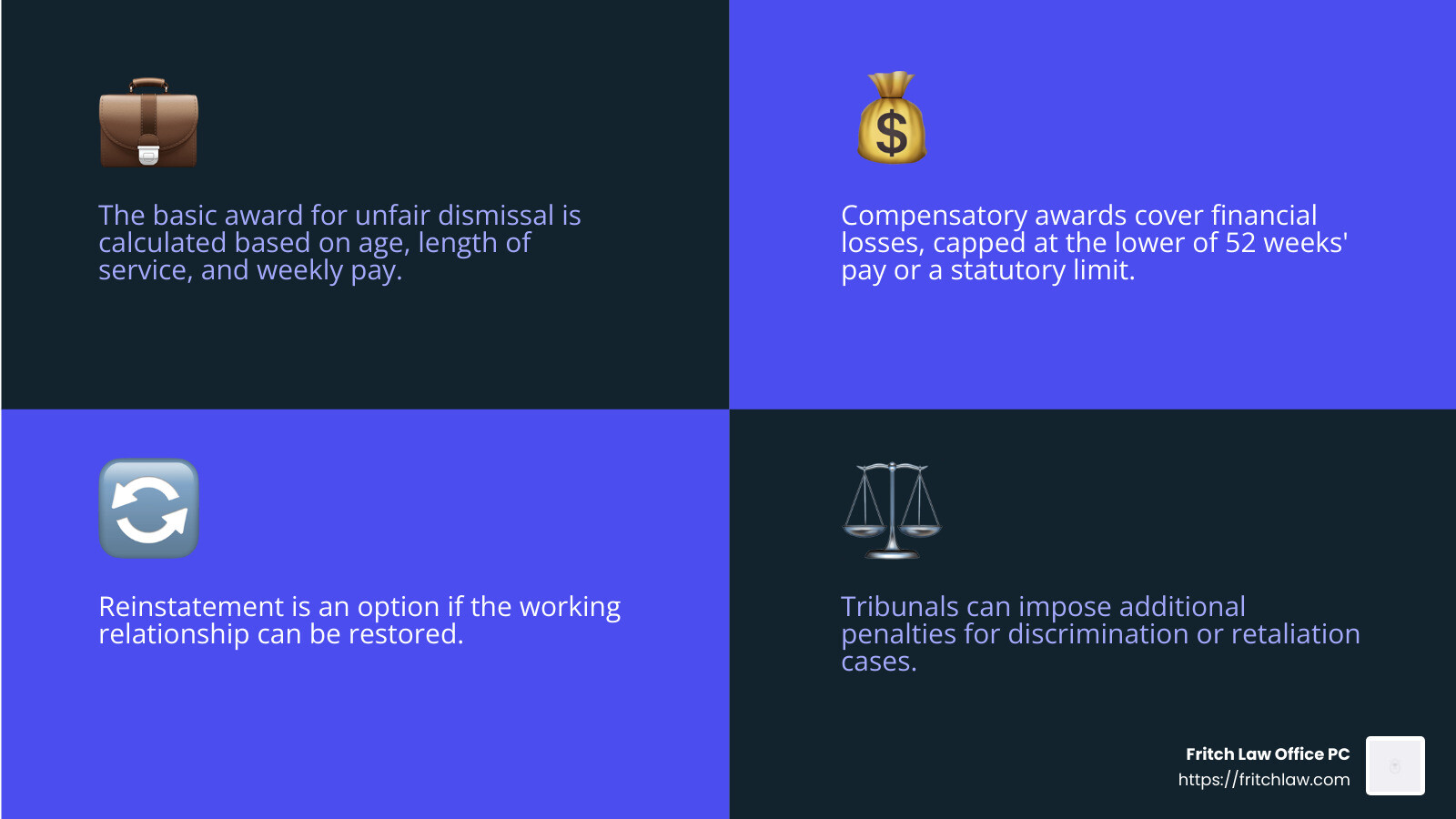
- Basic Award: This is calculated using a statutory formula based on your age, length of service, and weekly pay. The formula awards:
- 0.5 week’s pay for each year of employment under age 22
- 1 week’s pay for each year of employment between ages 22 and 40
-
1.5 weeks’ pay for each year of employment over age 41
-
Compensatory Award: This is designed to cover any financial losses resulting from your dismissal, such as lost wages. There is a cap on the compensatory award, which is the lower of 52 weeks’ pay or a statutory limit. However, in cases of automatic unfair dismissal, this cap may not apply.
Reinstatement
Reinstatement refers to getting your old job back. This remedy is less common as it depends on whether the working relationship can be restored. However, if you wish to return to your position and the tribunal finds it feasible, they might order your employer to reinstate you.
Tribunal Awards
In addition to compensation and reinstatement, tribunals can make specific orders or awards based on the details of your case. These might include:
-
Loss of Statutory Rights: Compensation for the loss of statutory rights, acknowledging that it takes time to rebuild employment rights in a new job.
-
Additional Penalties: In cases involving discrimination or retaliation, employers might face further financial penalties or orders to correct their practices.
Understanding these remedies can help you set realistic expectations and decide on the best course of action. Whether it’s seeking financial compensation or aiming for reinstatement, knowing your options is key to navigating the aftermath of an unfair dismissal.
Next, we’ll tackle some frequently asked questions about unfair dismissal claims.
Frequently Asked Questions about Unfair Dismissal Claims
What is an example of unfair dismissal?
Unfair dismissal can happen in several ways, but two common examples are discrimination and retaliation.
-
Discrimination: This occurs when an employee is fired because of their race, gender, age, or any other protected characteristic. For instance, if an older employee is dismissed while younger colleagues with similar performance levels remain, it might be a case of age discrimination.
-
Retaliation: This is when an employee is terminated for engaging in a protected activity, like reporting harassment or unsafe work conditions. For example, if an employee reports unethical behavior to HR and then gets fired soon after, it could be seen as retaliatory dismissal.
How do you prove a dismissal was unfair?
Proving an unfair dismissal claim involves gathering strong evidence to support your case. Here’s what you’ll need:
-
Evidence: Collect emails, performance reviews, witness statements, and any other documentation that supports your claim. This can include records of any complaints you made or responses from management.
-
Contract Violations: Check your employment contract for any breaches. If your dismissal violated terms agreed upon in your contract, such as promised job security or specific termination procedures, this can strengthen your case.
-
Documentation of Discrimination or Retaliation: Keep detailed records of any discriminatory remarks or retaliatory actions. This can include written notes or recordings (if legally permissible).
What is the most common remedy for unfair dismissal?
The most common remedy for unfair dismissal is compensation. This typically includes:
-
Basic Award: Calculated based on your age, length of service, and weekly pay, this is a statutory formula used to determine part of your compensation.
-
Compensatory Award: Covers financial losses like lost wages. This is subject to a cap, but exceptions may apply in cases of automatic unfair dismissal.
Another potential remedy is reinstatement, where you get your old job back. However, this is less common and depends on whether the employment relationship can be mended.
Understanding these aspects of unfair dismissal claims can help you steer your situation more effectively. Next, we’ll conclude our discussion by highlighting the personalized legal representation offered by Fritch Law Office PC.
Conclusion
Navigating an unfair dismissal claim can be daunting, but you don’t have to do it alone. At Fritch Law Office PC, located in Jasper, Indiana, we offer personalized and client-focused legal representation. Our experienced lawyers understand the complexities of employment law and are dedicated to helping you achieve a fair outcome.
We believe in listening to your concerns and providing clear, practical advice custom to your unique situation. Whether you’re dealing with discrimination, retaliation, or contract violations, our team is here to guide you every step of the way.
Our commitment to personalized service means we focus on what’s best for you, ensuring your rights are protected and your voice is heard. If you’re facing an unfair dismissal, let us help you find the path to justice.
To learn more about how we can assist with your employment law needs, visit our Practice Areas page. We’re here to provide the support and representation you deserve.