Eviction lawyers play a crucial role in navigating the complex world of landlord-tenant disputes. Whether you’re a tenant facing eviction or a landlord dealing with nonpayment issues, understanding your legal rights and the eviction process is essential. Here are key points to consider:
- Eviction Process: Evictions can be complicated, involving court filings, notices, and sometimes lengthy legal battles.
- Legal Representation: Having an experienced eviction lawyer can make a significant difference. They help clients understand their rights, represent them in court, and advise on the best course of action.
- Tenant Rights: Tenants have rights that protect them against unlawful evictions, such as the right to due process and protection from retaliatory actions by landlords.
I’m David Fritch, a lawyer with over 40 years of experience in legal practice, focusing on diverse areas, including those that affect tenants and landlords. My career began at Arthur Anderson & Company, and now, at Fritch Law Office, I am committed to offering reliable, client-focused legal services.
Understanding the Eviction Process
Evictions can seem daunting, but understanding the process can help you steer it more effectively. The eviction process is primarily governed by state laws, which outline the specific steps landlords must follow to legally remove a tenant from a property. These laws ensure that both landlords and tenants are treated fairly and that the process is transparent.
Eviction Procedures
The eviction process typically begins with a notice to vacate, which informs the tenant of the landlord’s intention to reclaim the property. This notice must be delivered in accordance with state-specific regulations, and it often specifies a timeframe for the tenant to either resolve the issue (such as paying overdue rent) or vacate the premises.
If the tenant does not comply with the notice, the landlord can file for an eviction order in court. This involves submitting the necessary documentation and attending a court hearing where both parties can present their case. It’s crucial for tenants to attend this hearing, as failing to do so usually results in an automatic judgment in favor of the landlord.
State Laws
Each state has its own set of rules regarding evictions, which can affect the timeline and procedures involved. For instance, in Texas, the landlord must provide a three-day notice to vacate before proceeding with court action, whereas other states may have different requirements. Understanding these state-specific laws is crucial for both landlords and tenants to ensure compliance and protect their rights.
Court Orders
Once the court hears the case, it will issue a decision. If the ruling is in favor of the landlord, a writ of possession may be granted, allowing the landlord to reclaim the property. Tenants typically have a limited time to vacate, often five days, before the landlord can take further action, such as involving law enforcement to enforce the eviction.
Tenants have the right to appeal the court’s decision, but this process can be complex and may require legal assistance. Tenants who wish to appeal should act quickly, as there are strict deadlines to meet.
In summary, the eviction process is a structured legal procedure that requires adherence to specific state laws and regulations. Whether you are a tenant or a landlord, understanding these procedures is essential to protect your rights and interests.
The Role of Eviction Lawyers
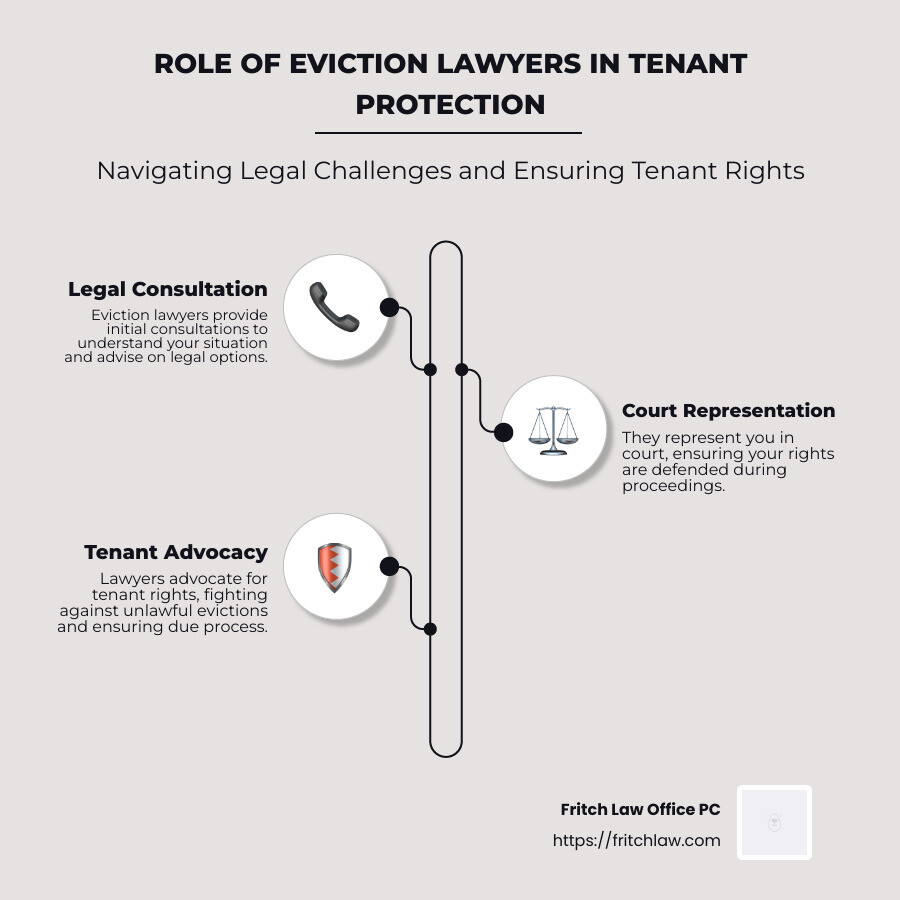
Navigating the eviction process can be complex and stressful for both landlords and tenants. This is where eviction lawyers come in, providing crucial support and guidance throughout the process. These legal professionals specialize in landlord-tenant law, offering services that include legal assistance and court representation.
Landlord-Tenant Lawyer
An eviction lawyer, often referred to as a landlord-tenant lawyer, is trained to handle disputes between landlords and tenants. They understand the intricacies of state-specific eviction laws and can help clarify the rights and responsibilities of both parties. Whether you’re a landlord seeking to evict a tenant or a tenant facing eviction, an experienced lawyer can provide valuable insights and advice custom to your situation.
Legal Assistance
Legal assistance from eviction lawyers is invaluable, especially in cases where the eviction process becomes contentious. Lawyers can help draft and review eviction notices to ensure they comply with state laws. They also assist in gathering evidence and preparing documents necessary for court proceedings. Having a lawyer by your side can prevent costly mistakes and increase the likelihood of a favorable outcome.
Court Representation
When an eviction case goes to court, having legal representation can make a significant difference. Lawyers can represent landlords or tenants during hearings, presenting evidence and arguments on their behalf. They are familiar with court procedures and can steer the legal system efficiently. This representation is crucial, as the outcome of the court case can have long-lasting impacts on both parties involved.
In conclusion, eviction lawyers play a vital role in ensuring that the eviction process is conducted fairly and legally. They provide essential legal assistance and court representation, helping to protect the rights and interests of both landlords and tenants.
How to Choose the Right Eviction Lawyer
Choosing the right eviction lawyer can significantly impact your experience and outcome, whether you’re a landlord or a tenant. Here are some key factors to consider:
Free Consultations
Many law firms offer free initial consultations. This is a great opportunity to discuss your case without any financial commitment. During this meeting, you can ask questions about the lawyer’s experience with eviction cases and their understanding of local laws. It’s also a chance to gauge how well they communicate and whether they seem genuinely interested in your situation.
Legal Fees
Understanding the cost of legal services is crucial. Legal fees can vary widely, so it’s important to get a clear picture of what you’ll be paying. Some firms, like the one mentioned in the research, charge flat fees for eviction services. This can help you budget effectively, as you’ll know the total cost upfront. Always ask about any additional fees that might apply, so there are no surprises later.
Personalized Service
Every eviction case is unique. A lawyer who offers personalized service will tailor their approach to fit your specific needs. This means they take the time to understand the nuances of your case and provide solutions that align with your goals. Personalized service often translates to better outcomes, as the lawyer is more invested in your case.
By considering these factors, you can find an eviction lawyer who not only understands the legal landscape but also aligns with your needs and budget. This choice can make a significant difference in navigating the complex eviction process effectively.
Frequently Asked Questions about Eviction Lawyers
What kind of lawyer do I need if I’m being evicted?
If you’re facing eviction, you’ll want to seek out a landlord-tenant lawyer. These lawyers specialize in the rights and responsibilities of both landlords and tenants. They can offer legal assistance by reviewing your case, advising you on your rights, and representing you in court if necessary. Legal representation can be a game-changer, especially since statistics show that only a small percentage of tenants have legal representation in eviction cases, compared to the vast majority of landlords.
How do I get free eviction help?
There are several resources available for tenants in need of free eviction help. Many states have legal aid organizations that provide assistance to those facing eviction. These services can help you understand your rights and options, and may even provide representation in court. Beyond legal aid, there are also rental assistance programs available that can help you catch up on overdue rent and possibly avoid eviction altogether.
How long does it take to evict a tenant?
The eviction process can vary by location, but it typically follows a structured timeline. After a landlord serves an eviction notice, the tenant usually has a specific number of days to respond. If the case goes to court, the timeline can extend. Generally, the entire process can take anywhere from a few weeks to several months, depending on the court’s schedule and whether the tenant contests the eviction. Each step in the process has specific legal requirements that must be met, which is why having a knowledgeable lawyer can be beneficial.
Conclusion
At Fritch Law Office PC, we pride ourselves on offering personalized legal representation custom to meet your unique needs. We understand that facing an eviction can be a stressful and overwhelming experience. That’s why we focus on a client-focused service that ensures you are supported every step of the way.
Our experienced attorneys are dedicated to helping you steer the complexities of landlord-tenant law with confidence. Whether you’re a landlord seeking to reclaim your property or a tenant needing protection against unlawful eviction, we’re here to provide the guidance and representation you deserve.
Choosing the right legal partner can make all the difference. With our client-centric approach, we listen to your concerns, answer your questions, and work tirelessly to achieve the best possible outcome for your situation.
If you’re in need of legal assistance, don’t hesitate to contact Fritch Law Office PC today. Let us help you find peace of mind and secure your rights with our dedicated legal support.