
Navigating the complex world of estate planning and probate attorney indiana indianapolis can be overwhelming, but finding the right attorney doesn’t have to be. Here’s a quick answer for those in need:
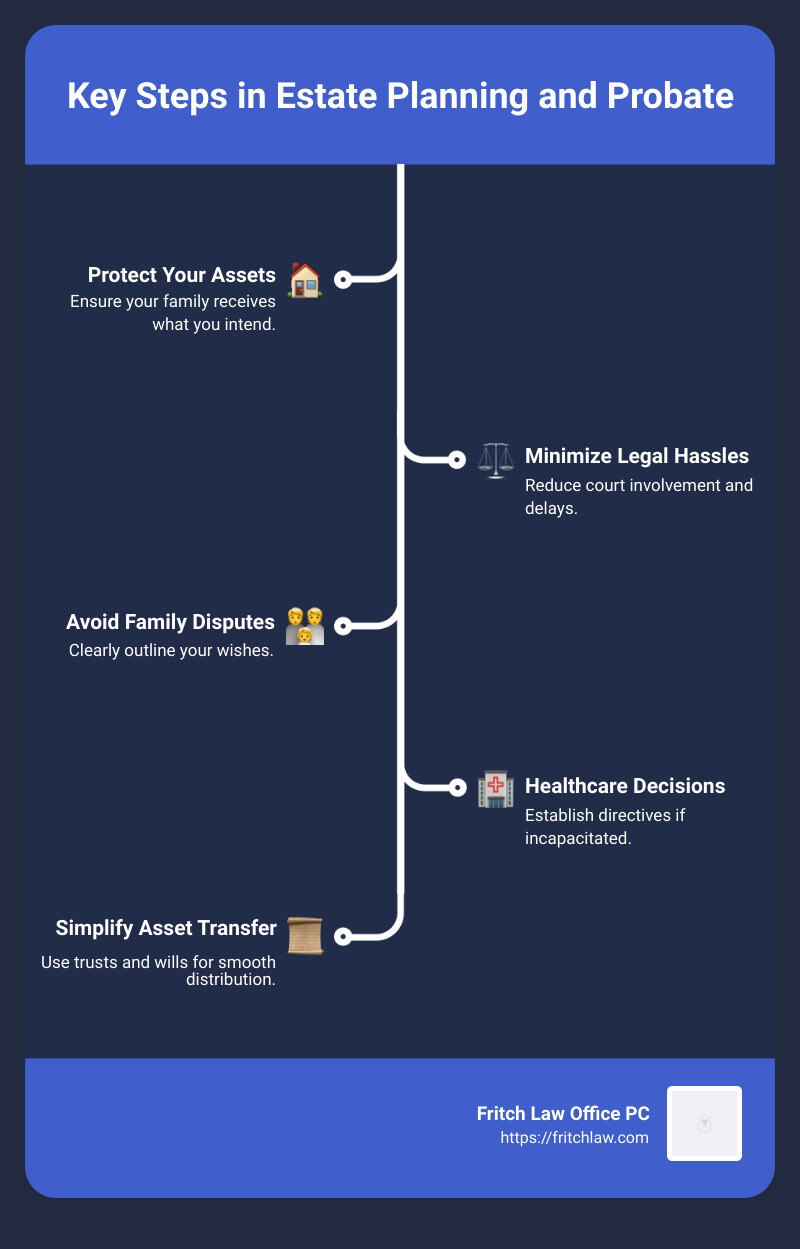
- Protect Your Assets: Ensure your family receives what you intend.
- Minimize Legal Hassles: Reduce court involvement and delays.
- Avoid Family Disputes: Clearly outline your wishes.
- Healthcare Decisions: Establish directives if incapacitated.
- Simplify Asset Transfer: Use trusts and wills for smooth distribution.
Estate planning and probate attorney indiana indianapolis matters often involve intricate legal processes crucial for safeguarding your family’s future and ensuring your wishes are respected. Many people aim to avoid or minimize probate due to its potentially lengthy and costly nature.
My name is David Fritch, with over 40 years of experience in estate planning, probate, and wealth management. At Fritch Law Office PC, we prioritize personalized, efficient legal guidance custom to your needs.
Understanding Estate Planning and Probate
Estate planning and probate can seem complex, but they are essential for managing your assets and ensuring your wishes are followed. Let’s break down these concepts into simpler terms.
What is Estate Planning?
Estate planning is about preparing for the transfer of your assets after you pass away. It involves creating legal documents like wills, trusts, powers of attorney, and health care instruments. Here’s a quick look at these key elements:
-
Wills: A will specifies how you want your assets distributed after your death. Without a will, the state decides based on intestacy laws, which might not align with your wishes.
-
Trusts: Trusts, like a revocable living trust, allow you to transfer assets while avoiding probate. You retain control during your lifetime, and after your death, the trust dictates asset distribution.
-
Power of Attorney: A durable power of attorney lets you appoint someone to make financial decisions if you become incapacitated. This ensures your financial affairs are managed properly, even if you can’t oversee them yourself.
-
Health Care Instruments: A living will, also known as a healthcare directive, outlines your medical care preferences if you become incapacitated. It specifies whether you want life-prolonging procedures, ensuring your healthcare wishes are respected.
What is Probate?
Probate is the legal process that takes place after someone dies to settle their estate. It is a court-supervised procedure that includes several steps:
-
Will Validation: The court verifies the validity of the will. If there is no will, the estate is distributed according to state laws.
-
Estate Inventory: All property belonging to the estate is gathered, inventoried, and appraised.
-
Debt Payment: The personal representative notifies creditors and ensures all debts and taxes are paid.
-
Estate Distribution: After debts are settled, the remaining assets are distributed to the heirs and beneficiaries as specified in the will or by state law.
The probate process can be lengthy and expensive, which is why many people seek to avoid it through effective estate planning.
Why You Need an Estate Planning and Probate Attorney in Indianapolis
Hiring an estate planning and probate attorney in Indiana, Indianapolis offers numerous advantages.
Legal expertise is a primary benefit. Estate laws are complex and vary by state. An experienced attorney understands these laws and can navigate the legal landscape to ensure your documents are valid and enforceable.
Tax minimization is another significant benefit. Attorneys can develop strategies to reduce estate and inheritance taxes, ensuring more of your assets go to your beneficiaries. They can advise on the use of trusts, partnerships, and other tools to minimize tax liabilities.
Dispute resolution is crucial during probate. If disputes arise among heirs or beneficiaries, an attorney can mediate and resolve these issues efficiently. This helps avoid costly and time-consuming legal battles.
Estate management involves many tasks, from inventorying assets to paying debts and taxes. An attorney can handle these responsibilities, ensuring the estate is managed properly and in accordance with the law.
When to Hire an Attorney
Knowing when to hire an attorney is essential for effective estate planning and probate management.
Debts and taxes: If the estate has significant debts or tax obligations, an attorney can ensure these are handled correctly, preventing issues that could delay the probate process.
Property sale: When selling estate property, legal representation can ensure the sale complies with state laws and maximizes the estate’s value.
Complex estates: Estates with numerous assets, business interests, or complicated family dynamics benefit from legal expertise. An attorney can create a comprehensive plan that addresses all these factors.
Will contests: If there is a dispute over the validity of a will, an attorney can represent the estate in court. They can handle claims of undue influence, fraud, or lack of testamentary capacity, ensuring the testator’s wishes are honored.
Key Services Offered by Estate Planning and Probate Attorneys
Estate planning and probate attorneys provide a wide range of services designed to help you manage your estate, steer the probate process, and resolve any disputes that may arise. Below, we break down the key services they offer:
Estate Planning Services
Wills and Trusts: Creating a will is essential for ensuring your assets are distributed according to your wishes. A will allows you to:
- Distribute Property: Specify who inherits your belongings.
- Appoint Executors: Name a trusted person to handle your last wishes.
- Care for Dependents: Establish guardianship for minor or disabled children.
- Support Causes: Leave assets to friends, charities, or other entities.
A living trust can be an effective tool for managing and transferring assets. It offers several benefits:
- Probate Avoidance: Assets in a living trust bypass the probate process, saving time and reducing legal costs.
- Flexibility: You can access, revise, or revoke the trust during your lifetime.
- Privacy: Unlike wills, trusts are not public records, keeping your estate details confidential.
Power of Attorney and Health Care Instruments: These documents ensure that your financial and medical decisions are handled according to your wishes if you become incapacitated.
- Durable Power of Attorney: Allows someone to make financial decisions on your behalf.
- Health Care Representative: Appoints someone to communicate with medical professionals on your behalf.
- Living Will: Details your preferences for medical treatment and end-of-life care.
Charitable Contributions: Attorneys can help you plan and implement charitable contributions, including the drafting and administration of charitable trusts and foundations.
Probate Administration Services
The probate process involves several steps to ensure that a deceased person’s estate is properly managed and distributed. Experienced probate attorneys offer the following services:
Estate Inventory: Compiling a comprehensive list of all assets and properties belonging to the estate.
Debt Payment: Notifying creditors and ensuring all debts and taxes are properly paid.
Tax Filing: Handling the processing of gift, estate, and fiduciary income tax returns, as well as audits and disputes.
Estate Distribution: Distributing the estate in accordance with the will and other testamentary instruments.
Dispute Resolution Services
Disputes can arise during the probate process, and an experienced attorney can provide effective representation to resolve these issues. Key services include:
Will Contests: Representing clients in disputes over the validity of a will, including claims of undue influence, fraud, or lack of testamentary capacity.
Fiduciary Duty Disputes: Addressing concerns when heirs and beneficiaries believe the personal representative has failed to properly perform a required fiduciary duty.
Multiple Wills: Resolving disputes when there is more than one will in existence and determining which will should be given effect.
Omitted Heirs: Representing interested parties when potential heirs are omitted from the will.
By offering these comprehensive services, estate planning and probate attorneys help ensure that your estate is managed efficiently and your wishes are respected.
How to Choose the Best Estate Planning and Probate Attorney in Indianapolis
Choosing the right estate planning and probate attorney in Indiana, Indianapolis can significantly impact how smoothly your estate is managed. Here’s how to find the best fit for your needs.
Qualifications to Look For
Legal Expertise: Ensure the attorney has a strong background in estate planning and probate law. This includes understanding wills, trusts, power of attorney, and healthcare directives.
Certifications and Specializations: Look for attorneys who have additional certifications or specializations in estate planning and probate law. These credentials indicate a deeper level of expertise.
Years of Experience: Check how long the attorney has been practicing. More years typically mean more experience handling a variety of cases, which can be beneficial for complex estates.
Client Reviews: Read client reviews to get a sense of the attorney’s reliability and effectiveness. Positive reviews often highlight clear communication, responsiveness, and professionalism.
Questions to Ask Potential Attorneys
Experience with Similar Cases: Ask if the attorney has handled cases similar to yours. For example, if you have a large estate with complex assets, make sure they have experience managing such estates.
Fee Structure: Understand the attorney’s fee structure. Some may charge a flat fee, while others bill hourly. Knowing this upfront can help you budget accordingly.
Approach to Estate Planning: Discuss how the attorney approaches estate planning. Do they take the time to understand your unique needs and goals? Personalized service is crucial for a comprehensive estate plan.
Client References: Don’t hesitate to ask for references from past clients. Speaking with someone who has worked with the attorney can provide valuable insights into their effectiveness and client service.
By focusing on these qualifications and asking the right questions, you can find an experienced lawyer who will guide you through the estate planning and probate process with confidence.
Frequently Asked Questions about Estate Planning and Probate in Indiana
What is the Average Cost of Probate in Indiana?
The cost of probate in Indiana can vary widely based on several factors, including the value of the estate and whether the process is supervised or unsupervised.
- Supervised administration: This is more expensive because the court oversees the entire process. It involves more paperwork and court appearances, which can increase legal fees.
- Unsupervised administration: This is less costly as it involves minimal court supervision. The personal representative has more freedom to manage the estate, reducing legal and administrative costs.
On average, probate costs can range from 3% to 7% of the estate’s value. This includes court fees, attorney fees, and other administrative costs. For a more precise estimate, it’s best to consult with a probate attorney.
Do You Need a Lawyer for Probate in Indiana?
While it’s possible to handle probate without a lawyer, hiring an experienced probate attorney can be highly beneficial, especially for complex estates. Here’s why:
- Legal Representation: An attorney ensures that all legal requirements are met, reducing the risk of errors that could delay the process.
- Estate Complexity: If the estate includes numerous assets, properties, or business interests, a lawyer can help manage these complexities efficiently.
- Debt and Tax Issues: An attorney can assist in properly notifying creditors, settling debts, and handling any tax issues that arise.
- Property Sale: If real estate needs to be sold, a lawyer can facilitate the sale and ensure compliance with legal procedures.
How Long Do You Have to File Probate After Death in Indiana?
In Indiana, probate must be filed within a specific timeframe to ensure the estate is settled properly. According to the Indiana Code, you have up to three years from the date of death to file probate.
However, it’s advisable to begin the process as soon as possible to avoid complications. Delays can lead to:
- Increased administrative burdens: The personal representative may face more challenges in managing and distributing the estate.
- Potential disputes: Prolonged delays can give rise to disputes among heirs and beneficiaries.
- Extended estate settlement duration: The longer you wait, the longer it may take to settle the estate, delaying the distribution of assets to beneficiaries.
Starting the probate process promptly helps ensure a smoother, more efficient settlement of the estate.
Conclusion
At Fritch Law Office PC, we understand that estate planning and probate can be overwhelming. That’s why we offer personalized legal representation custom to your unique needs.
Estate planning is about more than just drafting a will. It’s about ensuring your wishes are clearly outlined and your loved ones are protected. Our team assists with creating comprehensive estate plans, including wills, trusts, powers of attorney, and health care instruments.
When it comes to probate in Indiana, we guide you through every step of the process. From inventorying the estate and paying debts to distributing assets, our experienced attorneys ensure compliance with Indiana probate law. We also handle disputes over wills, helping to resolve issues quickly and effectively.
Choosing the right estate planning and probate attorney in Indianapolis can make all the difference. With Fritch Law Office PC, you get experienced legal support dedicated to providing clear, compassionate guidance.
If you need assistance with estate planning or probate, contact us today. We’re here to help you steer this complex process with confidence and peace of mind.
For more information on our estate planning services, visit our Estate Planning page.